
Exploring the Impact of Stress on Health During the Pandemic
How Covid-19 & Lockdowns
affected the Health of Millions
across the United States
It’s completely understandable that your personal goals – from financial to physical to emotional – may not have stayed on track this year. In 2020, it’s proven to be a feat just to keep one’s head above water.
We’re worried about keeping our families safe from COVID-19 and about maintaining a reliable bank account amid unemployment and a receding economy, among other things.
Yes, managing certain serious aspects of health has been recommended by COVID-19 experts to mitigate risks associated with contracting the virus, but staying on track for your health and fitness goals is easier said than done.
Especially amidst all of these challenges – not to mention the fact that psychological stress of a worldwide pandemic has proven physiological consequences across the nation.
Wanting to better understand the effects COVID-19 is having on our body (apart from any consequences of actually contracting the virus), we recently launched a detailed study on weight gain and loss, eating changes, and other health-related habits as they pertain to our new surroundings.
We spoke to 1,000 Americans who were kind enough to share honestly just how the virus has affected the status of their health this year. Keep reading to hear what they had to say.
Pandemic Weight Fluctuations
Our study started by looking solely at weight. We asked respondents whether they had lost, gained, or maintained their weight since the pandemic and broke these responses down by generation and parental status.
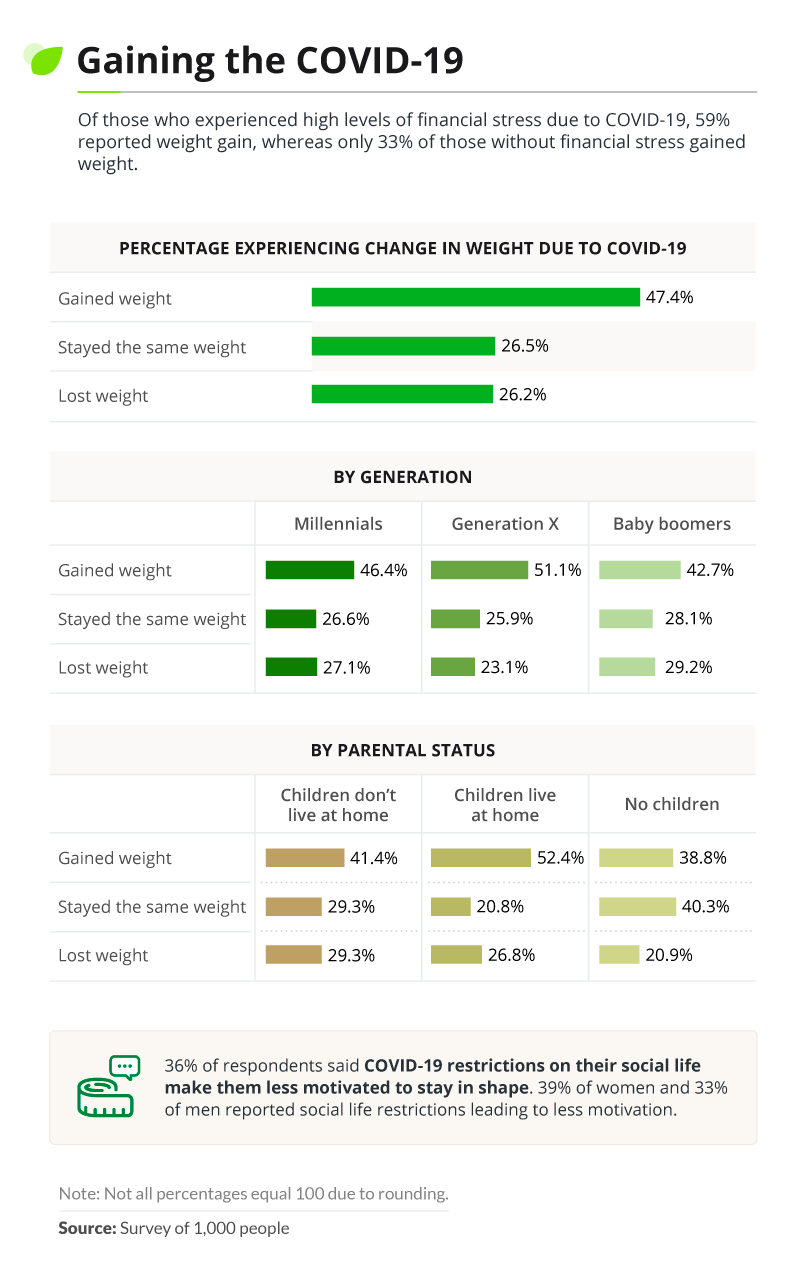
It became immediately apparent that weight gain is incredibly common during this time. Gaining weight was roughly twice as common as losing weight or maintaining weight during this period. Weight gain was even more common among those who had experienced significant financial stress this year, as roughly half of Americans have.
Even Generation X, which many assert are the most prepared generation for a recession, was actually the most likely generation to experience weight gain. In sum, weight gain is completely normal and even expected, so avoid being hard on yourself to the extent that it’s possible. You’re certainly not alone.
Parents with children living at home had it the hardest in terms of anyone with regards to health. This group had the highest percentage (52.4%) reporting weight gain in 2020. Between coping with home schooling, day care, at-home work distractions, and preparing additional meals (just to name a few), their selflessness for their families is perhaps revealed in these statistics.
Top Barriers to Health Goals in 2020
There are possibly too many barriers to even count this year, but our study wanted to look at the most common. This next portion of the survey asked respondents to select the top factors that they felt contributed to weight gain in 2020.
We also viewed responses by gender and generation to pull interesting insights across those demographics.
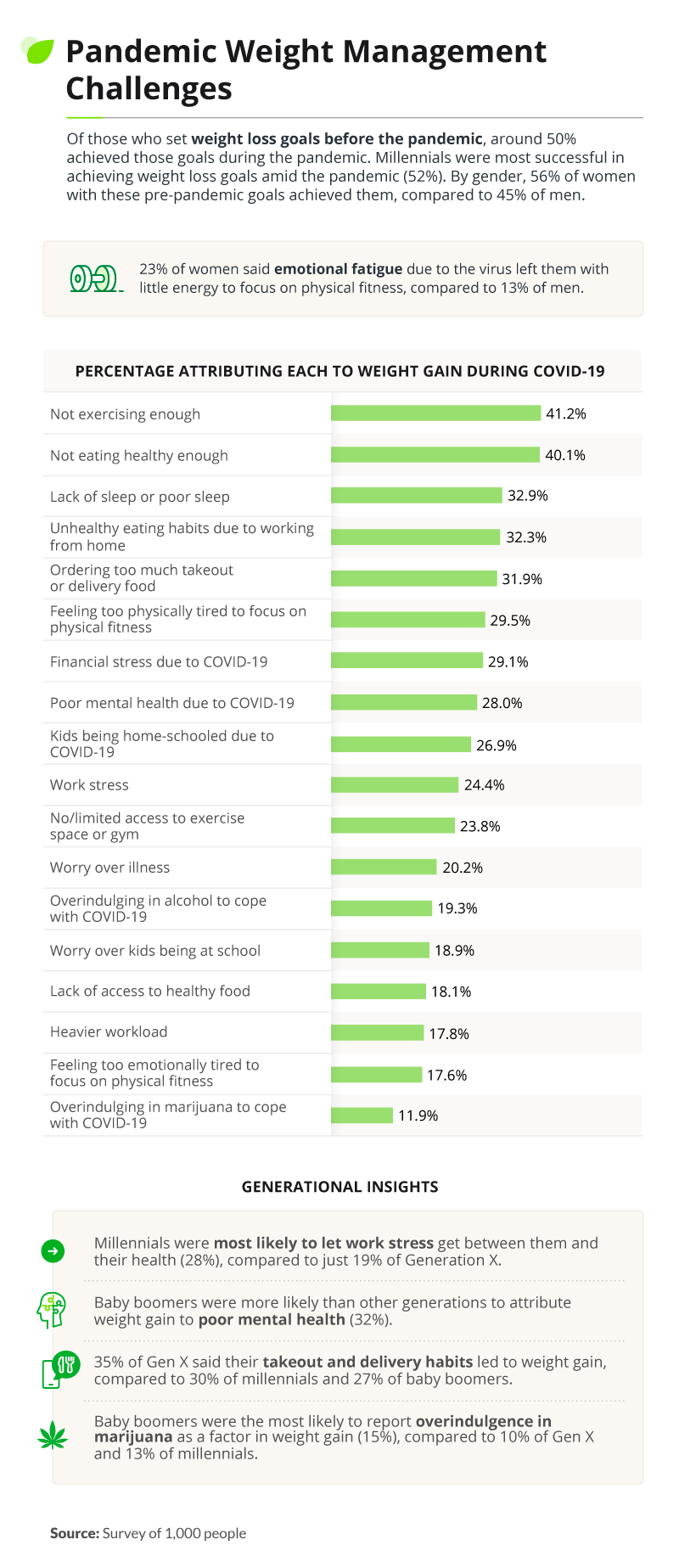
Not exercising enough was the top barrier to weight loss: 41.2% of people struggled in this area. This could have been due to a variety of factors, including motivation or even the fact that gyms across the country were required to close.
Many have now filed for bankruptcy. Not eating healthy enough foods was similarly common, with 40.1% citing this as a barrier to their weight loss goals.
Thirty-two percent blamed this on the disproportionate amount of takeout and delivery they were ordering, though Gen Xers were the most likely generation to mention it.
Nearly 1 in 5 respondents said they coped with COVID-19 through increased alcohol consumption, which blocked some of their weight goals. An additional 11.9% said they used marijuana for the same purposes, with baby boomers being the most likely to cite the substance as a catalyst toward weight gain.
Although studies have shown marijuana to increase both appetite and weight gain, baby boomers were also the most likely to attribute their weight gain to poor mental health (32%).
Millennials struggled particularly with letting workplace stress get between them and their health goals. Many financial experts consider this generation to be the hardest hit in 2020:
They have experienced a lasting fallout from the financial crisis, relatively smaller cushion to absorb the financial blow, and a disproportionate number of job losses and reductions. With these factors in consideration, their stress-health correlation makes complete sense.
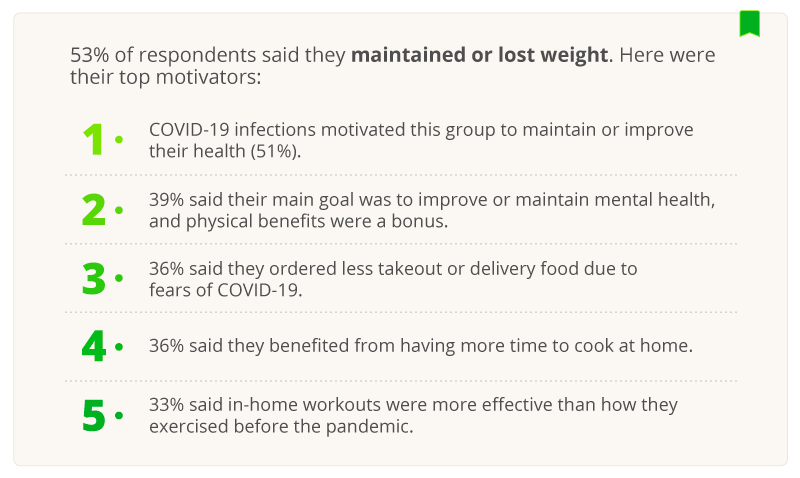
For many of these numerous and challenging barriers, goal setting appeared to be one antidote. Of those who set weight loss goals specifically, 50% were able to achieve them – even during a pandemic!
This incredibly encouraging statistic is backed by psychological science, which tells us that goal setting can help trigger new behaviors as well as sustain both focus and momentum. That said, the reason behind the weight loss goals was important to respondent success as well.
More than half experienced success when their primary motivation was health, as opposed to physical appearance. Another 39% of those who successfully maintained or lost weight said they were motivated by mental health, with physical health as a bonus.
Strategic Health Improvements
To end the study on a hopeful note, we wanted to explore how people planned on taking care of themselves, whether that be through lifestyle changes or nutritional education.
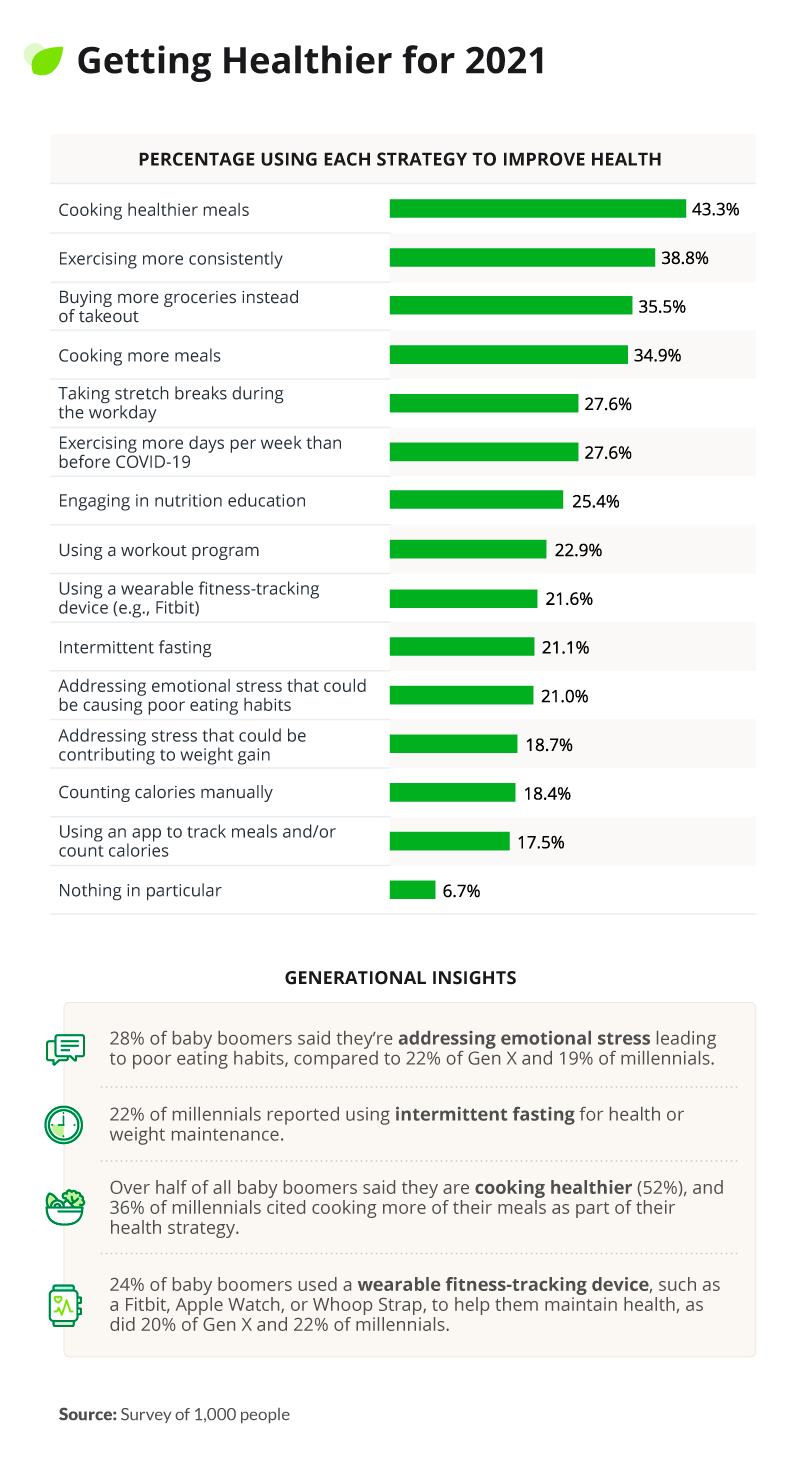
So for the last part of our study, we asked survey respondents about their specific health strategies and goals that they felt would improve their health or fitness.
Again, generational differences were considered in order to explore interesting differences in habits and strategies by age group.
[IMAGE]
Considering that the top barrier to health was eating unhealthy, we were happy to see how many had food-related health goals this year. Simply cooking healthier (which can also save money) was a top strategy among respondents.
Thirty-six percent also wanted to buy more groceries, and 34.9% simply desired to cook more often. Baby boomers most often planned to cook healthier, while millennials most wanted to cook more frequently.
Fortunately, many of the baby boomers we spoke to also planned to address their mental health concerns.
Twenty-eight percent of this generation said they planned to address their stress in 2021, compared to just 22% of Gen X and 19% of millennials. Millennials were more often trying intermittent fasting in order to adjust their goals.
Fortunately, nutritional education was on the goal list for 25.4%, as intermittent fasting takes specific knowledge to do in a healthy and safe way.
2021 Health Goals
If you haven’t set any health goals for yourself this year, look to this research for inspiration.
Our respondents shared some of their strategies for improving health, and though there is no one-size-fits-all approach to wellness, most of these improvements can benefit health in sustainable and practical ways.
Should you choose to select healthier groceries or cook more meals at home as part of your goal, above all, do what is best for you and your body. Whether that means gaining weight, losing weight, or keeping it exactly the same.
Run your health decisions by your doctor, and listen to what your body needs in terms of nutrition, rest or movement.
Whatever strategy you choose, Mercato can help you shop for healthier choices, or buy the perfect ingredients for that meal at home.
Whether you require fresh baked goods from the bakery down the street or crisp in-season vegetables from a local farmer, Mercato will connect you with your local food vendors and community without sacrificing convenience or risking your health.
To place an order or learn more, visit us online today.
Methodology and Limitations
To explore the topic of health and the effects of COVID-19 on health and fitness goals, we surveyed 1,000 people ages 18 to 88 and asked them questions about how their weight and habits may or may not have changed due to COVID-19.
The mean age of respondents was 38 with a standard deviation of 12 years. 58% of respondents were millennials, 28% were Generation X, and 10% were baby boomers. Just 4% of our respondents identified as Generation Z or as older than baby boomers and were excluded from generational analysis due to sample size. Around 43% of respondents were female, 56% were male, and less than 1% identified as nonbinary.
Survey data has certain limitations related to self-reporting. These limitations include telescoping, exaggeration, and selective memory. We didn’t weight our data or statistically test our hypotheses, as this was an exploratory study of health factors during COVID-19.
Fair Use Statement
Considering how many people included nutritional education as part of their goals for next year, you may want to share this article and help them find the knowledge they need.
You’re welcome to do so, you just must be sure your purposes are noncommercial and that you link back to this page to provide proper attribution.